

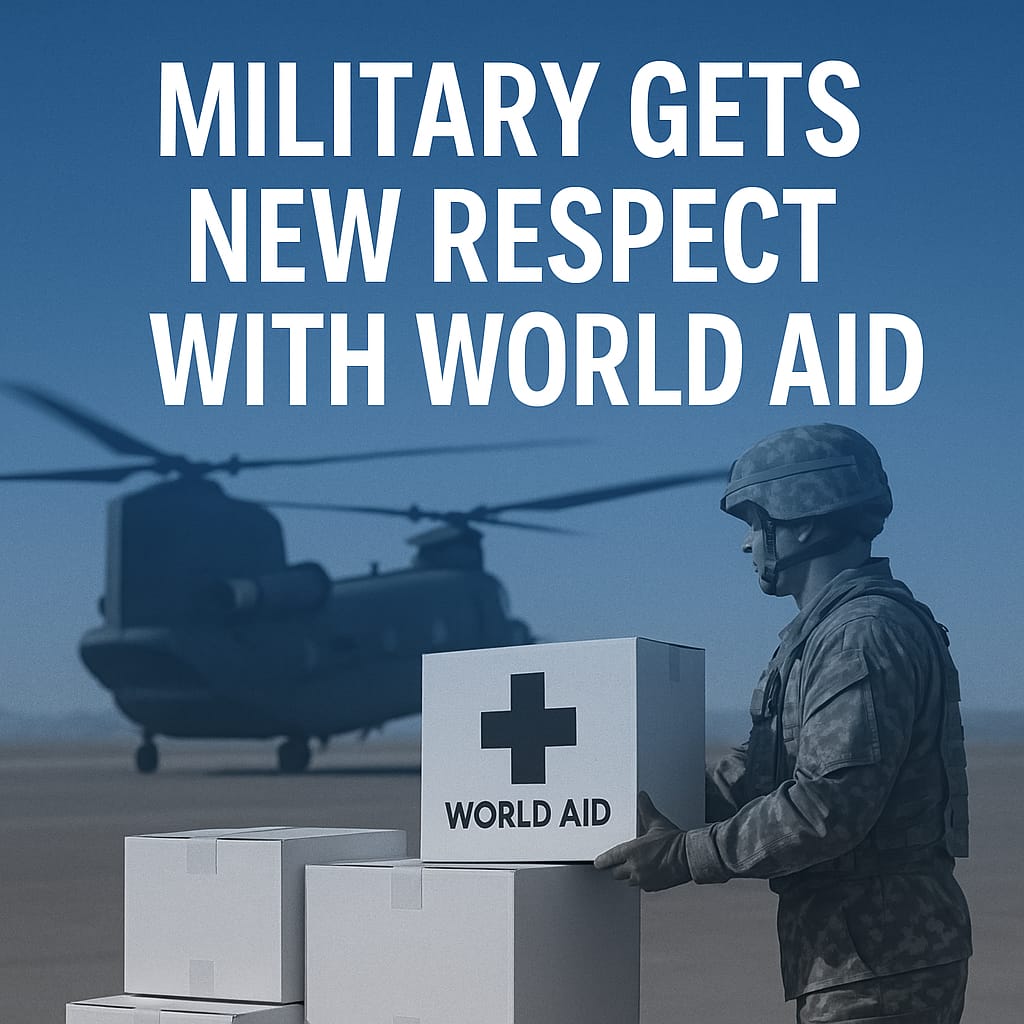
How the military is involved in World Aid | Why This Earns Respect | Real-World Examples | Impact on Military Image
How the military is involved in World Aid
a. Disaster Relief Operations
During earthquakes, floods, hurricanes, or other disasters, militaries often deploy quickly with logistics, medical aid, and rescue teams.
Example: After the 2015 Nepal earthquake, the U.S., Indian, and Chinese militaries provided helicopters, doctors, and supplies.
b. Humanitarian Missions
Military aircraft and ships transport food, water, and medicine to remote or war-torn areas.
Medical corps treat civilians in underserved areas.
c. Peacekeeping and Stability
Under the UN or regional coalitions, military personnel help maintain peace and protect civilians in volatile regions (e.g., UN peacekeepers in Africa).
d. Pandemic Response
Military facilities and personnel were critical during COVID-19—setting up field hospitals, transporting vaccines, and enforcing lockdowns in many countries.
Why This Earns Respect
a. Speed and Efficiency
Militaries are highly organized, trained for rapid deployment, and equipped to handle logistics under pressure—qualities often lacking in civilian agencies.
b. Risk-Taking
Soldiers often operate in dangerous or unstable environments to help people, showing bravery and compassion.
c. Bridging Public Opinion
Civilians often associate the military with war. When people see soldiers saving lives or helping communities, it builds trust and admiration.
d. Global Cooperation
Joint military-humanitarian missions show countries working together, promoting diplomacy and goodwill.
Real-World Examples
USAID & U.S. Military: Work together to provide global disaster relief.
Indian Army: Known for rapid rescue during regional natural disasters.
UN Peacekeepers: Composed largely of military personnel from member nations.
Russian and Chinese military aid: In Africa and Asia, these show soft-power diplomacy.
Impact on Military Image
Moves perception from being purely war fighters to being protectors and helpers.
Improves civil-military relations and recruitment appeal.
Increases diplomatic influence through humanitarian goodwill (also called “military soft power”).
Conclusion
The military gaining “new respect with world aid” reflects how its expanding humanitarian roles are changing public perception from one of fear or controversy to one of admiration and trust. It underscores how strength and discipline can be used not only for defense, but also for compassion and global cooperation.